
Tilt your head back a bit and look in the mirror. Do you see the way your nose connects to your upper lip? Now open your mouth. Do you see the seam on the roof of your mouth? Sometimes you can feel it with your finger or your tongue. That’s where your palate grew together in the middle. You can see that the palate goes from behind your top front teeth all the way to the back of your mouth.
What's a Cleft Lip or Cleft Palate?
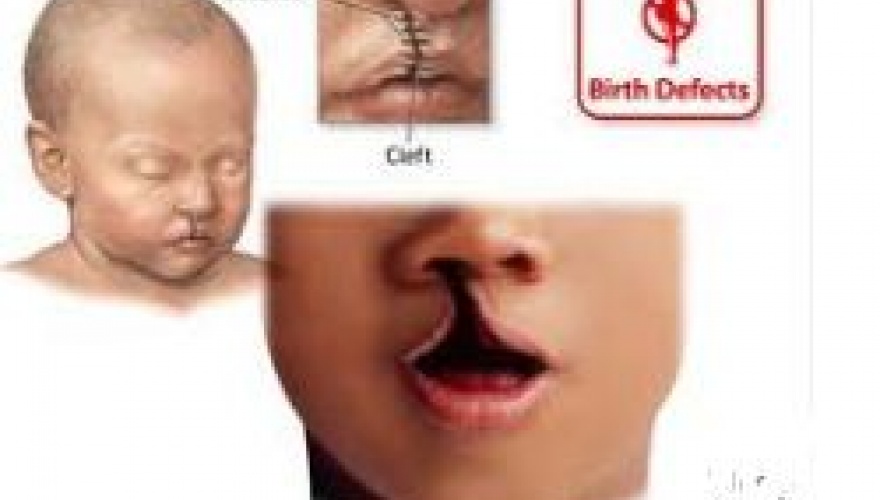
The word cleft means a gap or split between two things. A cleft lip is a split in the upper lip. This can happen on one or two sides of the lip, creating a wider opening into the nose. A cleft palate is a split in the roof of the mouth. This leaves a hole between the nose and the mouth. Sometimes a cleft lip and cleft palate occur together. Cleft lip and cleft palate are birth defects. This means they happen while a baby is developing. Normally, the mouth and nose of a baby develop between the first 6 and 12 weeks of growth inside the mother. In some babies, parts of the lips and roof of the mouth dont grow together. Because the lips and the palate develop separately, it’s possible to have cleft lip alone, cleft palate alone, or both together. We don’t always know why a particular baby has cleft lip or cleft palate.
Sometimes the condition runs in families. This means that a person with cleft lip or cleft palate may have a relative with the same thing. Other-times, cleft palate is part of a syndrome, meaning there are birth defects in other body parts, too. Sometimes a cleft may be related to what happened during a mother’s pregnancy, like a medication she may have taken, a lack of certain vitamins, or exposure to cigarette smoke. Most of the time, however, the cause of the cleft is unknown.
What Happens to a Kid With Cleft Lip or Cleft Palate?
A baby with cleft lip and cleft palate may have other difficulties that include feeding problems, middle ear fluid and hearing loss, dental problems, and speech problems. Feeding problems Have you ever laughed so hard while drinking milk that it came out of your nose? Because there is a hole between the nose and mouth in babies with a cleft palate, they have the same problem, but it can happen every time they drink and not just when they laugh. Fortunately, there are feeding specialists and special baby bottles that can help. Ear and hearing problems Kids with cleft palate can have hearing loss. This may be caused by fluid building up inside the ear. They usually need very small special tubes placed in their eardrums to help them hear better.
Therefore, children with cleft palate should have their ears and hearing checked about once or twice a year. Dental problems Children with cleft lip or palate often have dental problems. These problems can include small teeth, missing teeth, extra teeth, or crooked teeth. All kids need to see the dentist regularly and keep their teeth clean. A kid with a cleft might need to go to the orthodontist for braces, too, to make sure his or her teeth grow in straight. Speech problems Kids with cleft lip or cleft palate may also have problems with speech. When you talk, the muscles of your soft palate help to keep air from blowing out of your nose instead of your mouth. Kids with cleft palate find their soft palate sometimes does not move well and lets too much air leak out the nose while speaking. That gives them problems with certain sounds and it makes them sound like they are speaking partly through their nose.
This article was culled from the publications of Deen Communication Limited