
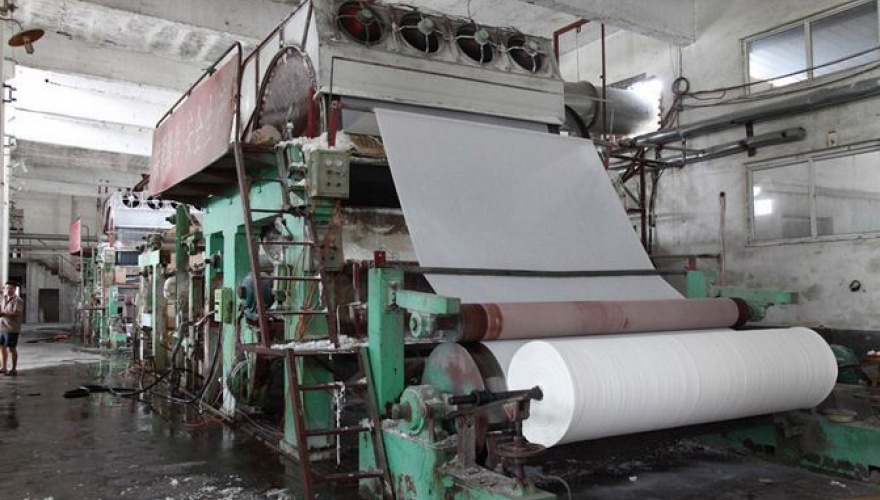
HOW DOES A PAPERMAKING MACHINE WORK?
The main part of a papermaking machine is a wide belt made of tightly woven wire mesh. The belt moves in a loop, and it keeps moving all the time. Pulp is poured evenly onto the belt at one end of the machine. As the belt moves along, water drains from the pulp. The fibers remain, leaving a mat of wet paper. The belt goes through metal rollers that squeeze out more water. Now the paper is strong enough to be lifted off the belt. It passes between heated rollers that dry it completely.
Finally, the paper is pressed tightly between cold metal rollers that make it smooth. The finished paper is wound onto large rolls or cut into standard sizes.
WHO INVENTED PAPER?
The ancient Chinese invented paper about 2,000 years ago. Chinese papermakers used fibers from tree bark and old rags. The art of paper-making spread out from China about 500 years later. It finally arrived in Europe about 900 years ago. The invention of the printing press in the 1400s made books popular, and the demand for paper increased ..All paper was handmade until 1798.
Thats when a Frenchman named Nicholas Robert invented a papermaking machine that could make paper in continuous rolls. Before the invention of paper, ancient people used many different surfaces for writing. They wrote on clay, wood, stone, and metals. More than 4,500 years ago, the ancient Egyptians made a paper like material from a plant called papyrus. Papyrus reeds were cut into flat slices, layered, moistened with water, and pressed into sheets. The English word paper comes from the word papyrus. Source: Microsoft Encarta for Kid
This article was culled from the publications of Deen Communication Limited